
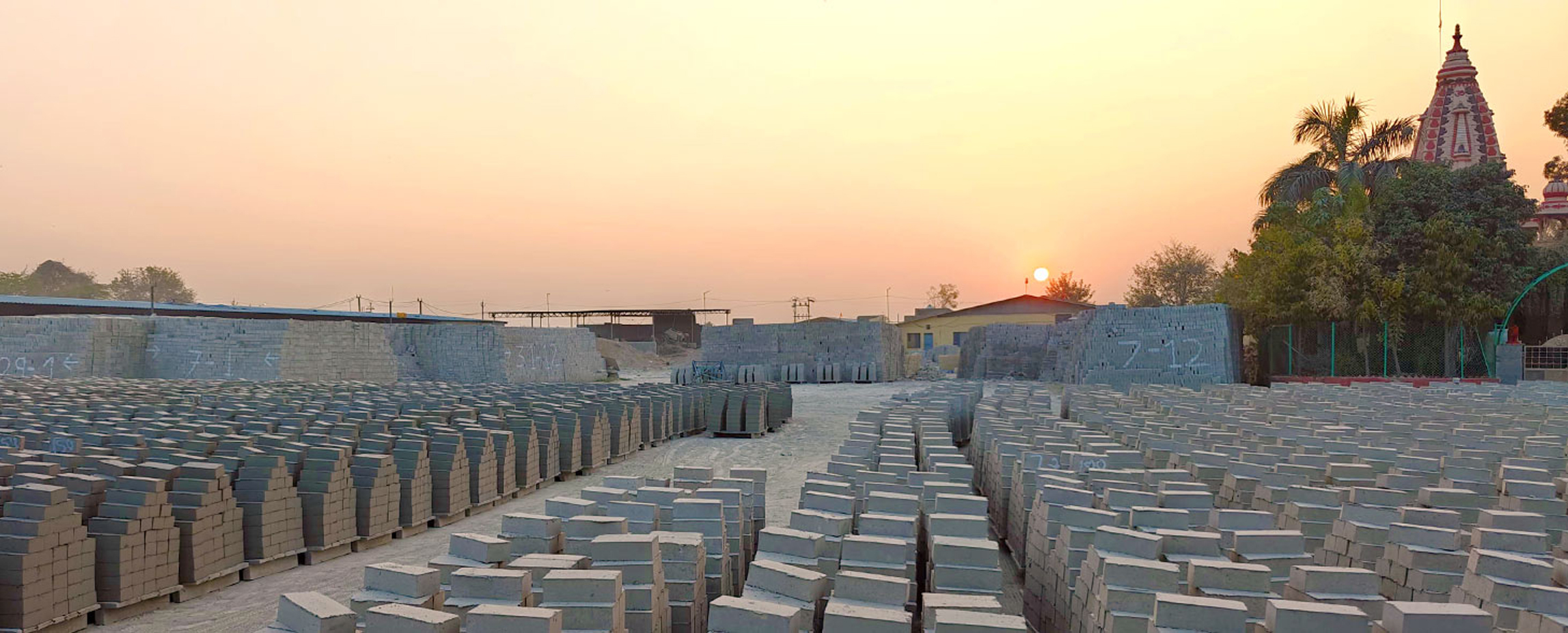
Our flyash bricks are crafted with precision, utilizing flyash, a by-product of thermal power plants, as the essential material. Complying with industry standards such as IS 12894-2002, our bricks undergo rigorous testing in our state-of-the-art in-house laboratory, ensuring unmatched quality and durability. With strengths ranging from 75 to 125 Kg/cm², our flyash bricks offer superior structural integrity and fire resistance, making them the ideal choice for walls, partitions, and other load-bearing applications.

By utilizing flyash, we divert waste from landfills, contributing to a greener environment.

Our bricks provide superior thermal insulation, reducing energy consumption for heating and cooling.

With minimal maintenance requirements, our flyash bricks offer long-term structural stability.

Competitive pricing makes flyash bricks an economical and sustainable alternative.

Adding an extra layer of safety, our bricks enhance the fire resistance of buildings, ensuring occupants' safety.
| Properties | 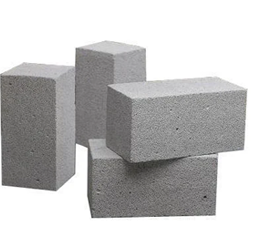 Flyash Bricks |
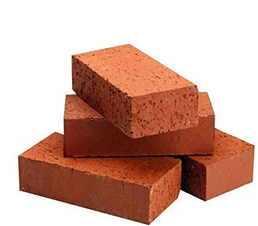
Clay Bricks |
|---|---|---|
| Selling Rate | Flyash Bricks are available at the rate of Rs 4 per piece. | Clay Bricks are available at the rate of Rs 5-10 per piece. Thus, basic cost is 30% to 250% above. |
| Plaster Thickness | Flyash Bricks are machine made needs 12mm plaster on both faces. | Clay bricks are usually handmade, hence needs 12mm plaster on one side and 30 to 35 mm plaster on another side, thus plaster cost is almost doubled. |
| Strength | Compressive strength of flyash brick is 75 to 150 kg per square centimetre. | Compressive strength of clay brick is 35 to 70 kg per square centimetre. |
| Water Absorption | Flaysh brick water absorption remains upto 10% of brick weight. | Clay brick water absorption varies from 15 to 25% of brick weight, hence porosity in bricks lends to seepage. |
| Breakage | Flyash Brick breakage varies from 1-3% during delivery at site. | Clay brick breakage varies from 5-8% during delivery at site. |
| Efflorescence | There is no efflorescence in Flyash Bricks. | Clay brick which are made using ravines soil, gets whitish after use in construction. |
| Manufacturing Process | Flyash bricks are mechanically made with fix quantum of raw materials which results in consistent quality. | Clay bricks are usually handmade causing uneven and non-uniform finish which gets under or over burnt during heating process. |
| Environmental Impact | Flyash bricks are Eco-Friendly, almost all the ingredients used in manufacturing of the bricks are end product of coal, lime, crusher etc. | Clay bricks are made from most fertile top soil, which is an irreparable loss to environment and heating process to manufactured clay bricks causes additional air pollution. |
| Lesser Weight on Structure | Flyash bricks initial weight is more, but after uniform 12mm plaster on both faces, its overall weight becomes lesser than clay brick. | Clay brick initial weight is usually less due to its porosity, but after application of 12 mm plaster on one side and 25-35 mm plaster on other side due to its uneven surface, its overall weight becomes more than flyash brick. |
| Size of Brick | Flyash bricks are uniform in size and thickness as they are machine made. | Clay bricks are non-uniform and vary in thickness as they are usually handmade. |
| Thermal Effect | Use of lime in flyash bricks helps in decreasing internal room temperature upto 5 degrees. | Porosity in clay bricks helps in transmitting heat easily from outside causing a rise in temperature of the room. |
| Homogeneous Property | All the raw material used in flyash bricks is also used in manufacturing of cement/ cement mortar. Hence total property of the material is homogenous in nature. | Fertile soil is used in manufacturing of clay bricks; hence it is not homogeneous in nature. |